
Discovery without desire
Beautiful photographs without occasion, heritage or a reason to enquire.
fine jewellery marketing agency India
For gold, diamond, polki, kundan and designer jewellery retailers: editorial storytelling, high-intent discovery and a confident path to appointment.

A fine jewellery marketing agency helps high-value jewellery brands attract relevant buyers, establish trust in materials and craftsmanship, and convert discovery into meaningful consultations, appointments and sales conversations. The right approach prioritises qualified enquiries over vanity metrics.
Someone admires a necklace, saves the post and disappears. A bride requests details but never books a visit. Your craft is not the problem; the missing bridge between interest and confidence might be.
Beautiful photographs without occasion, heritage or a reason to enquire.
Unclear product specifications, making processes or appointment expectations.
Slow follow-up, unqualified messages and no helpful next step.
How we help
Turn provenance, design language and verified craftsmanship into buyer-ready stories.
Premium social campaigns, search-led pages and bridal intent content that fits your customer.
Clear consultation options, meaningful qualifying questions and personal follow-up content.
Coordinate product pages, WhatsApp, local discovery and in-store consultation journeys. 
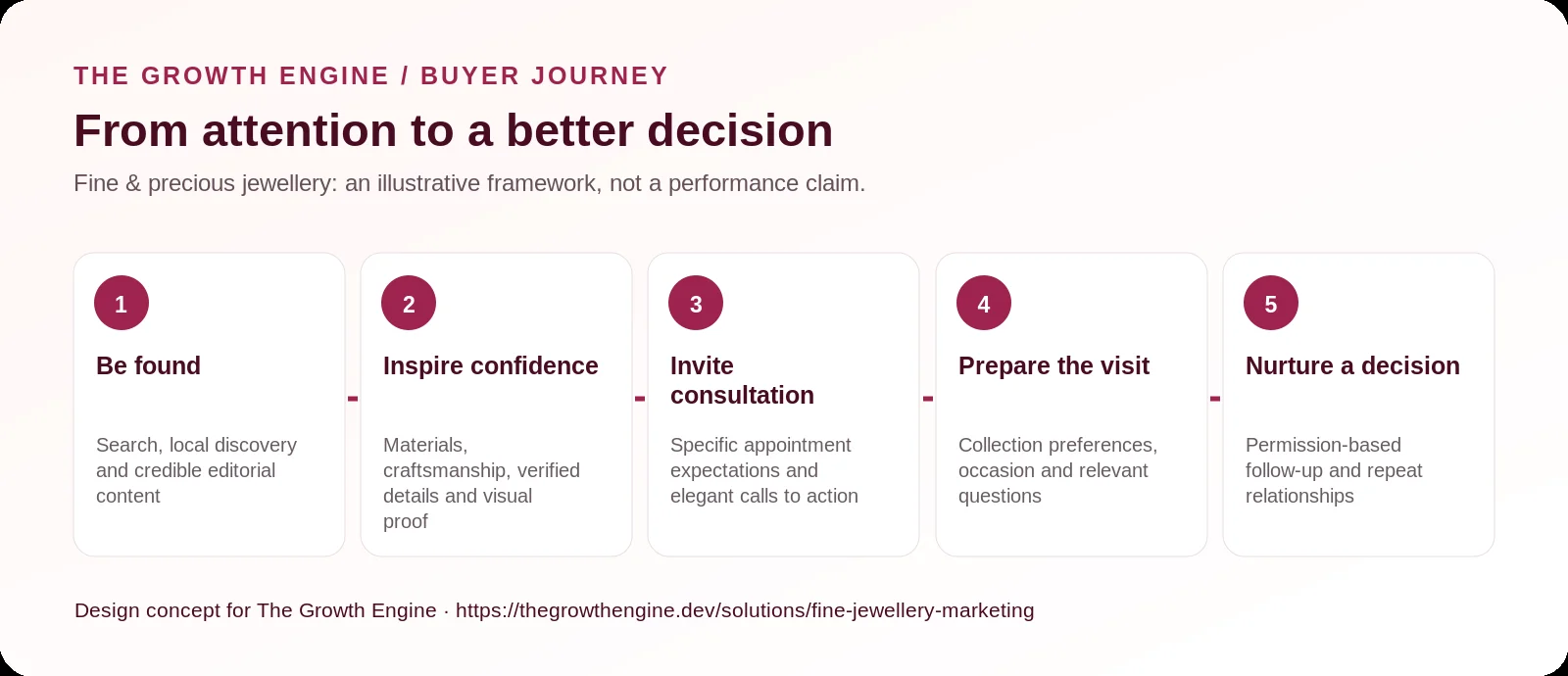
Measure progress, not noise
Measure qualified bridal and high-value enquiries, consultation bookings, attended appointments and progression where the retailer can reliably share data. Never claim a sale from a click alone.
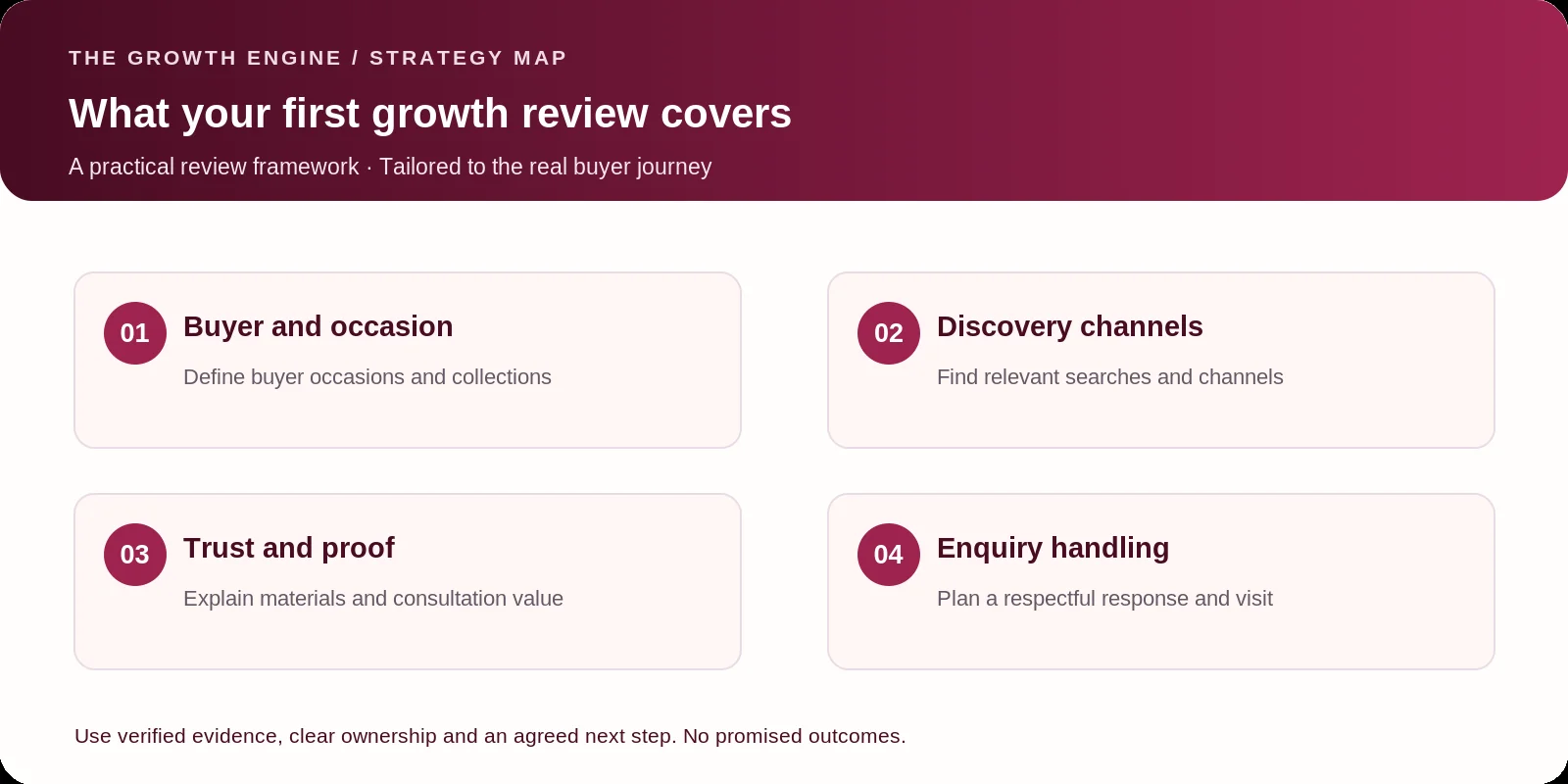
Share your collection, market and the point where qualified buyers stop moving. We will identify the first useful intervention before proposing work.
Related: qualified lead generation · SEO & AI search · client work · Growth Library
Common questions
Fine jewellery decisions involve higher financial commitment and more consideration. In a focused first planning discussion, buyers may compare craftsmanship, materials, design heritage, personal fit, and the experience of meeting a trusted retailer. A viral reel cannot answer all of those questions. We recommend connecting refined product storytelling with accurate specifications, credible expertise, appointment options, and respectful follow-up. A gold or diamond collection may call for an intimate consultation rather than an instant checkout. Before choosing campaigns, clarify whether the business needs qualified showroom appointments, bridal conversations, new collection discovery, or repeat custom orders. Each objective requires a different path.
Marketing can improve the path to qualified appointments by helping relevant buyers discover a collection, understand its suitability and know what happens during a consultation. Build collection pages around occasion and category, with clear location details, appointment options, and answers to important questions. In practice, a lead form can ask for the occasion and desired appointment window without demanding excessive personal information. The showroom team should respond promptly and share relevant pieces or a consultation outline. Track bookings and attended appointments separately from raw enquiries, because the most attractive campaign is not always the one that creates the best conversations.
Publish only claims your business can document and approve. If pieces have verified hallmarking, grading reports, or other certificates, explain which products they apply to and what the documentation means. Do not imply every item carries the same verification. In practice, product content should describe materials, stone information, design features and care accurately. Marketing teams can organise these details into buyer-friendly pages, short videos and consultation materials, but they should not invent technical assurances. Where a certification needs specialist interpretation, link to the issuer or request an approved explanation from your own experts. Accuracy protects both buyer confidence and reputation.
Choose according to buyer intent and the available purchase journey. From a buyer's perspective, search campaigns may reach people actively exploring bridal sets, jewellery stores or specific collections; Instagram may support discovery and storytelling earlier. Neither is automatically best. Review location, category, average order context, available creative and the quality of enquiries from each source. Ensure landing pages give a clear consultation option before increasing spend. Begin with a focused test and compare qualified conversations, appointment attendance and cost per relevant enquiry. A strong creative cannot compensate for unclear product details or a team that cannot respond to prospective buyers.
Start by mapping bridal decisions rather than pushing one generic wedding advertisement. Some buyers are looking for inspiration; others need a specific type of necklace, an appointment or a conversation about customisation. For that reason, create collection pages for verified styles and occasions, then align local search visibility, editorial reels and referral content with those needs. Explain how a consultation works, which collections can be explored, and what information to share before visiting. Use accurate location pages only for real service areas. Track enquiries that become relevant meetings, and avoid assuming every bridal shopper has the same budget or timeline.
A fine jewellery landing page should quickly establish the collection, the intended customer, credible product information and the next step. Use strong original visuals, concise descriptions, approved craftsmanship details, and an easily understood appointment or enquiry action. Important information may include location, collection categories, availability enquiry procedures, aftercare and relevant certificates, provided each detail is accurate. For that reason, keep the layout fast and readable on mobile. Provide a direct answer to the main buyer question before adding decorative storytelling. For high-value pieces, reduce uncertainty: describe what the consultation covers, what visitors can discuss and how the team follows up.
They can, but the right path depends on the product and buyer. From a buyer's perspective, highly customised, bridal or high-value purchases often involve questions that benefit from a personal consultation. Other fine jewellery pieces may be suitable for a clear ecommerce checkout when pricing, availability, policies and product information are reliable. Test the journey rather than imposing one model. Some customers want to inspect a piece in person; others may prefer an initial digital discussion. Offer an appropriate next step for each product type and make it easy to switch channels. Measure buyer progression, not just completed online transactions.
Yes, when it adds verifiable knowledge rather than generic claims. Useful articles can explain design choices, jewellery care, differences between product styles, consultation preparation, and how to evaluate material information. From a buyer's perspective, approved maker interviews and close-up craftsmanship visuals may help buyers understand the work behind a collection. Use clear authorship and review technical statements with the retailer. Avoid publishing unsupported investment promises, medical claims or blanket statements about product durability. The purpose is to make informed buying easier, not to fill a blog with keywords. Strong content also gives showroom teams answers they can share during follow-up.
There is no reliable universal budget because product values, buying cycles, geography, creative needs and margins differ. Start with business capacity and the value of a qualified consultation, not a percentage borrowed from another retailer. Separate one-time foundations such as photography, page improvements and tracking from ongoing media spend and management. From a buyer's perspective, estimate how many suitable conversations the team can handle and what successful acquisition would need to cost. A modest, well-measured pilot can uncover useful information before committing to scale. Ask any agency to explain costs, responsibilities, reporting frequency and what remains outside the proposed scope.
Review metrics across the full journey: relevant search visibility, qualified enquiries, consultation bookings, attendance, follow-up completion and eventual customer decisions where the retailer can share records. For that reason, cost per lead alone is insufficient because an inexpensive enquiry may never involve a plausible buyer. Agree what qualifies an enquiry, such as collection interest and an appropriate consultation need, without making the process invasive. Record campaign source and response time consistently. Look for patterns in lost opportunities and use those lessons to improve messaging or enquiry handling. Never attribute a sale to marketing without a defensible method and agreed data.
Yes, the approach should translate the existing identity rather than replace it with a fashionable template. Begin by listening to the people who know the collection and customers. Importantly, capture approved craftsmanship details, the business story, distinctive design choices and consultation customs. Use contemporary photography, mobile-friendly pages and useful enquiry journeys while preserving a recognisable visual language. A modern website can still feel rooted in heritage. Agree which claims and images require approval, and define a practical content process for the team. The strongest result is a clearer experience that feels familiar to loyal customers and understandable to new ones.
Made-to-order buyers need clear expectations about process, timing, design approvals and what can change before an order is confirmed. Show examples you are authorised to share, explain the enquiry stages and make the consultation action obvious. Content can reveal how inspiration becomes a specification while avoiding unsupported promises about availability or delivery. In practice, gather only the information required for an initial conversation. Follow up with an accurate summary and appropriate next steps. If product creation depends on third-party makers or material sourcing, state that honestly. Marketing should support careful decisions rather than pressure the customer into a rushed commitment.
Local SEO can improve discoverability for people researching jewellery options in a particular area. In practice, maintain accurate business information, opening hours, service details and real showroom photographs on relevant profiles. Connect location information to useful collection and appointment pages on the website. Encourage authentic customer reviews without incentives that distort feedback. Avoid creating fictional location pages or claiming a presence in neighbourhoods where you do not operate. Review which searches lead to calls, direction requests and appointments, rather than treating impressions as completed sales. Local discovery works best when the information shoppers find matches what they experience in person.
Treat WhatsApp as part of a professional consultation path, not a stream of automated sales blasts. Make the opt-in clear, assign response ownership and use a helpful first reply that asks what the customer would like to explore. For that reason, share approved photographs, accurate collection context and available appointment options. Keep sensitive information to a minimum and respect communication preferences. For a buyer comparing bridal jewellery, a short curated selection may be more useful than a full catalogue. Track whether conversations progress to consultations or purchase decisions where the business has reliable records. Personalisation should feel useful, not intrusive.
We begin with the buying journey and the commercial problem rather than a package of predetermined posts. Share your collection, target market, active channels and the stage where customers most often stop. We can review positioning, existing content, important product information, enquiry paths, follow-up and available measurement. In practice, the next step is a prioritised scope focused on a problem we can reasonably influence. Creative production, media management, landing pages and other work should be agreed explicitly before implementation. Results depend on the collection, customer demand, internal response and many factors beyond marketing alone, so no sales outcomes are guaranteed.